
 by
by The Same Four Words…
Scroll through most listings for a historic home in Wyomissing and you will find the same four words doing all the work: “the charming original details”
That phrase is doing a lot of hiding. It could mean hand blown stained glass. It could mean a builder’s grade stock stair rail from 1994. Most agents cannot tell the difference, so they default to the phrase that covers both.
I can tell the difference. That distinction is the reason I’m writing this.
What “Historic” Actually Means in Old Wyomissing
Wyomissing was laid out as a planned community in the early 1900s, and “old Wyomissing” still carries the architecture to prove it: Colonial Revival symmetry, Tudor half timbering and steep gables, Craftsman built ins and hand worked woodwork. Wyomissing Hills holds some of the borough’s oldest homes, dating to the late 1800s. These styles are not interchangeable, and they should not be described the same way in a listing.
When an agent calls a Tudor “cozy” or a Colonial Revival “spacious,” they are describing square footage, not the house itself. Buyers searching for a historic home in Berks County deserve more than a generic adjective standing in for a century of craftsmanship. The borough’s own landmarks, from its castle stone manors to the Stone House, exist because someone once built with intention rather than convenience. A listing description should carry that same intention.
Stained Glass Is Not A Decoration. It Is a Signature Asset.
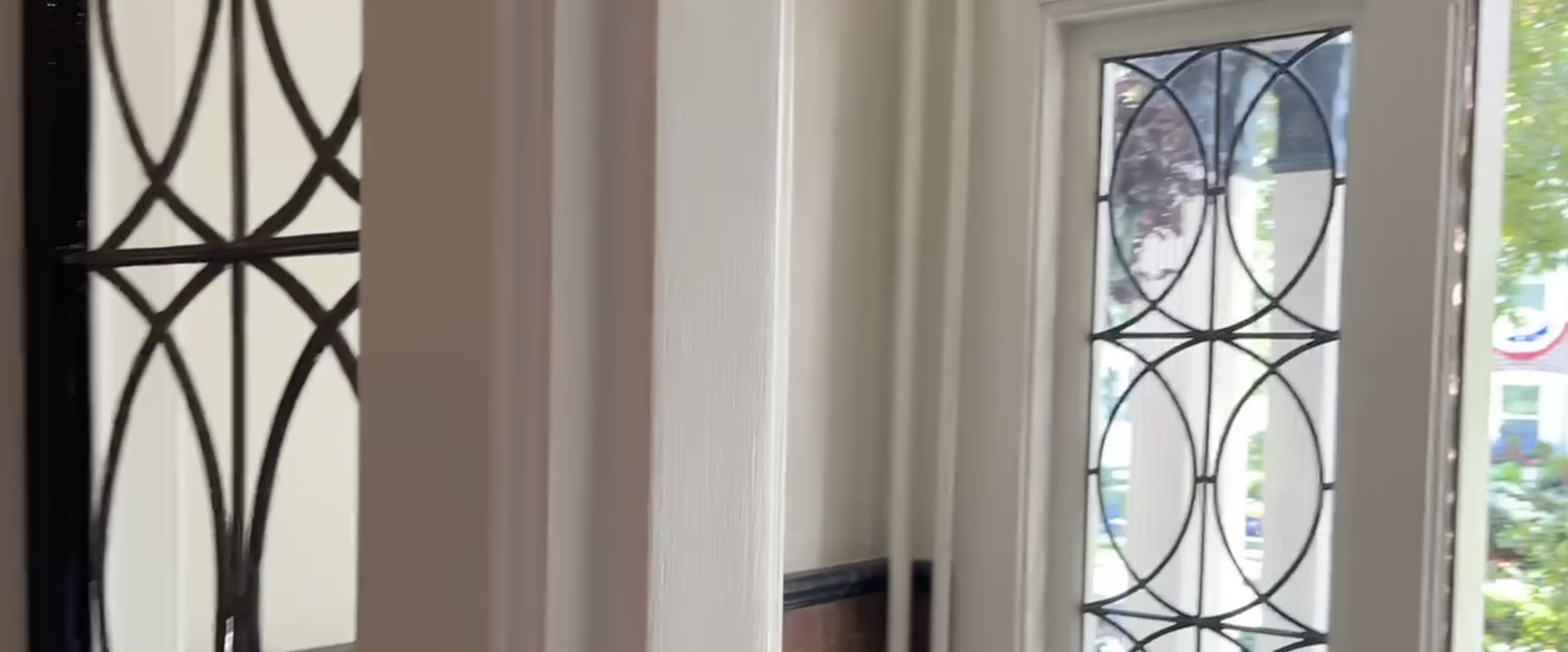
Original stained and leaded glass shows up across old Wyomissing, in transoms, stair landings, and sunrooms. Most listings mention it in passing, the way you would mention a fresh coat of paint. That undersells it.
See that image above? I took that photo while grabbing some air during the parade a few days ago.
Hand cut, hand leaded glass from the early 1900s was made by a person, not a machine, and the difference is visible once you know what to look for: slight variation in pane thickness, hand soldered came lines, glass with subtle waves rather than perfect flatness. That detail affects a home’s value, its restoration cost if a pane ever needs repair, and its story. A buyer should know whether they are purchasing an irreplaceable piece of craftsmanship or a later reproduction. I always know, and I always say so.
Crown Molding Tells You The Home’s Era
Plaster crown molding from the early 1900s was applied by hand, often in a single continuous run, with a depth and profile that modern foam molding cannot replicate. You can often date a home within a decade just by studying the molding profile in its main rooms, long before anyone checks the deed.
Most listing photos crop it out of frame entirely. I photograph it on purpose, and I explain what it means when I do.
FieldStone is Berks County’s Original Craft
Long before I sold real estate, my great-grandfather laid the stonework on the Pagoda’s Skyline Drive wall in 1905, work that still stands here in Berks County more than a hundred years later. I did not learn to read stonework from a course, I learned it by growing up around it. My own century-old home is built on a foundation of fieldstone.
That matters when you are touring a historic property, because not all stone is created equal. Hand set fieldstone, cut by someone who understood the material, ages differently than a modern veneer applied over block.
One is structural history. The other is a facade.
Knowing which one you are looking at changes how you value the home, and how you talk about it if you decide to sell.
Why This Actually Matters, Whether You’re Buying Or Selling
If you are selling an historic home, a listing of Zillow that says “original details” leaves value on the table. Buyers searching for a historic home in Wyomissing are often searching specifically for stained glass, hand set stone, or period molding. If your listing does not name those details, it will not surface for the buyers who value them the most.
If you are buying, understanding what is original versus what has been repaired or replaced changes your negotiation strategy, your restoration budget, and sometimes your insurance conversation.
A home with true hand leaded glass and hand set stone is a different asset than one with later reproductions, even if the two look similar in a photograph.
What I Look For That Other Agents Skip
- Hand soldered came lines versus machine set stained glass
- Plaster molding versus modern foam or MDF trim
- Hand set fieldstone versus modern stone veneer
- Original hardware, hinges, and doorknobs versus cheap builder’s grade fixtures
- Hearth and mantel craftsmanship, as this is a marker of a home’s original era
None of this shows up in a standard walkthrough. It shows up when someone has been trained to look for it, and has spent a lifetime around people who understand the nuance of these details. It’s kind of like shopping for furniture in North Carolina…IYKYK!
How I Showcase Your Home’s Unique Details When You Work with Me
Most “for sale” photography treats a historic home like any other property: wide shots of each room, a few exterior angles, done. That approach photographs the square footage, but it truly misses the substance.
When you contract with me to showcase your historic home for sale, I am intentional about the details. I photograph the crown molding profile deliberately, often with side lighting that shows its depth instead of flattening it. I schedule stained glass photography around the time of day when natural light passes through it, because a leaded window photographed at noon looks nothing like the same window at 4 in the afternoon. I photograph stonework close enough to show the hand tooling, not just from the curb. None of this is standard practice. It is standard practice for me, because I know what I am looking at, and I know it is worth showcasing properly.
The Bottom Line
I do not just sell historic homes in Wyomissing. I read them, and help you articulate their story…the same way my family has read this county’s stone and craftsmanship for four generations.
If you are selling a historic home in the suburbs of Reading, Pennsylvania, and you want a historic homes advisor who notices all the details that a standard real estate agent leaves out, I would welcome a private conversation. Would you like to get the conversation started? It would be my privilege to help you get started on your next chapter.